

A sprint planning session, start to finish.
An example of how a team of six might run planning: one person prepares the list ahead of time, everyone estimates in the meeting, and the numbers go straight back to the tickets.
The steps
Before the meeting: build the list
The scrum master creates a draft session and adds the candidate tickets by hand or pulls them in from Jira or GitLab. Nothing is live yet, so it can be done in one sitting or over a few days.
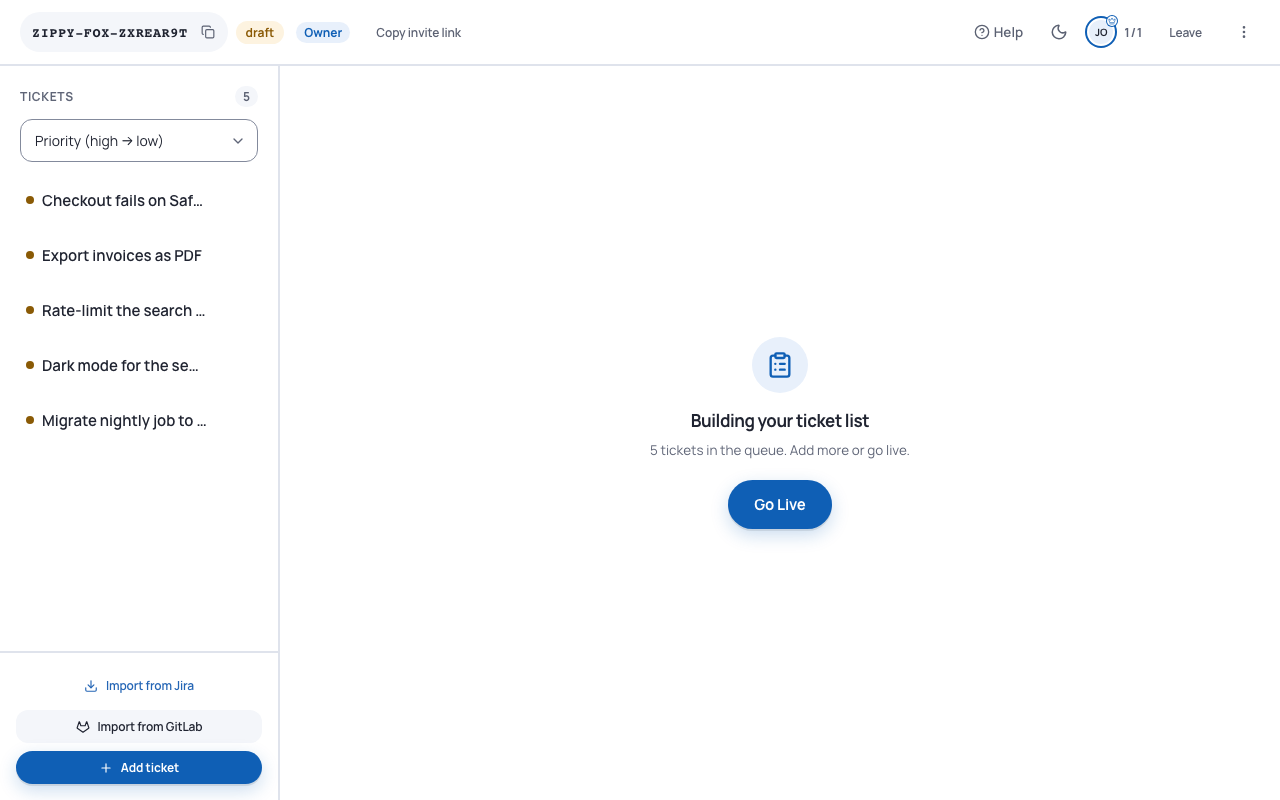
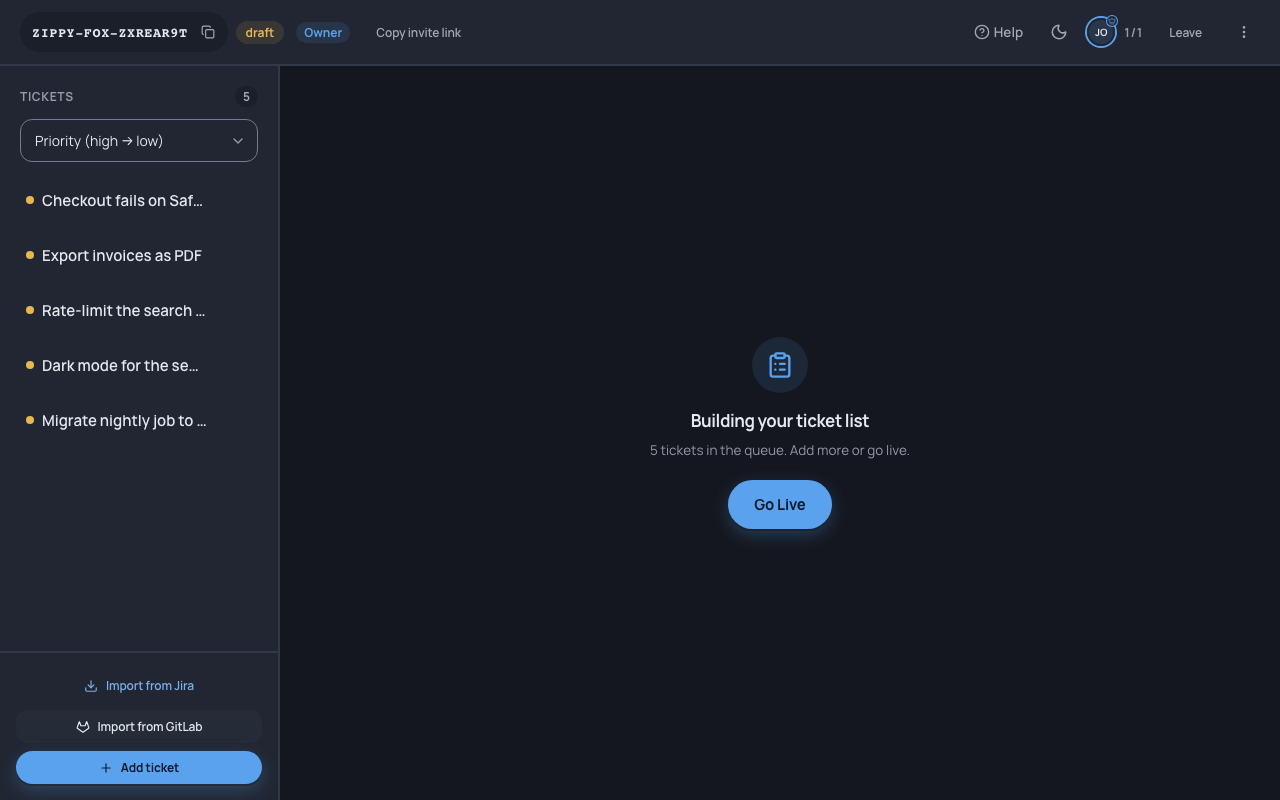
A draft session, ready to go live. In the meeting: share the code
The host goes live and posts the session code in the call. Each developer opens the link and signs in; the lobby shows who is in the room.
Estimate one ticket at a time
The host picks a ticket. Everyone votes at the same moment, and the live count shows how many are in without revealing a single value. The timer runs on the server so a round cannot drag on.
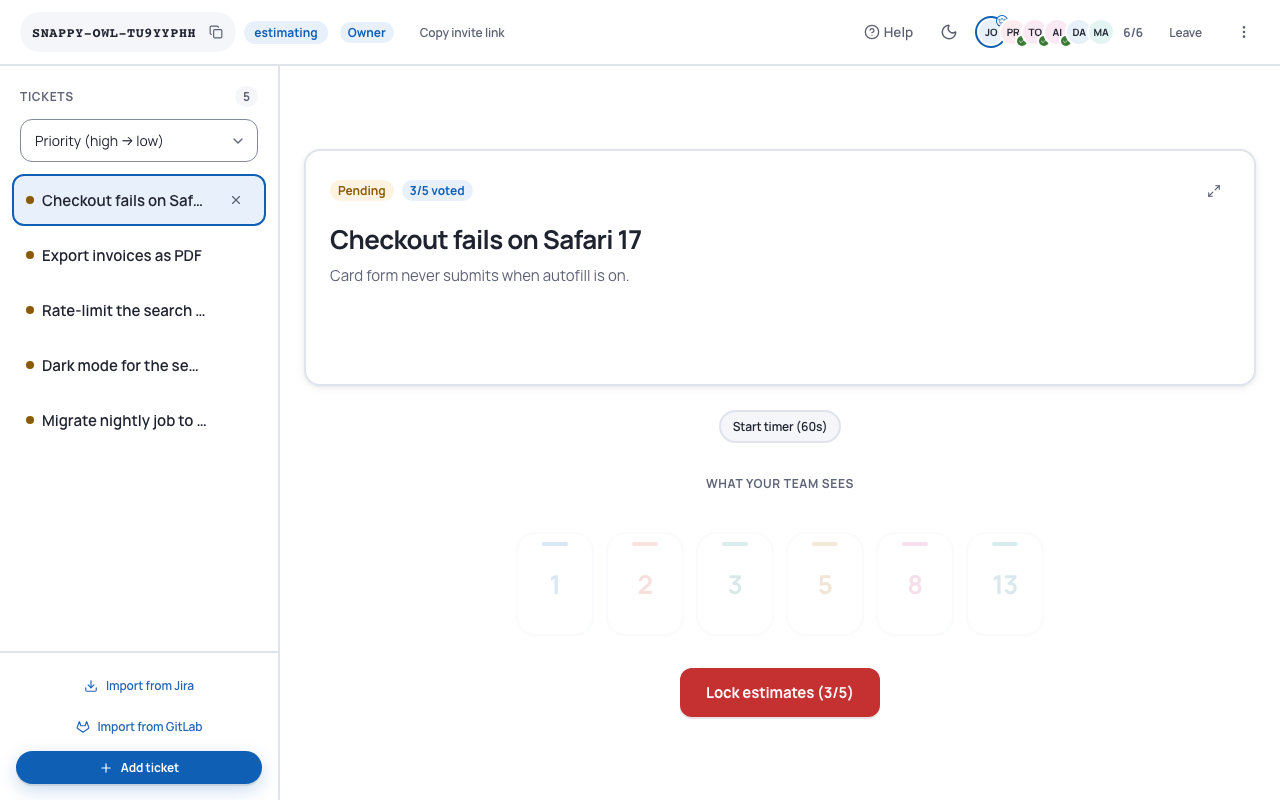
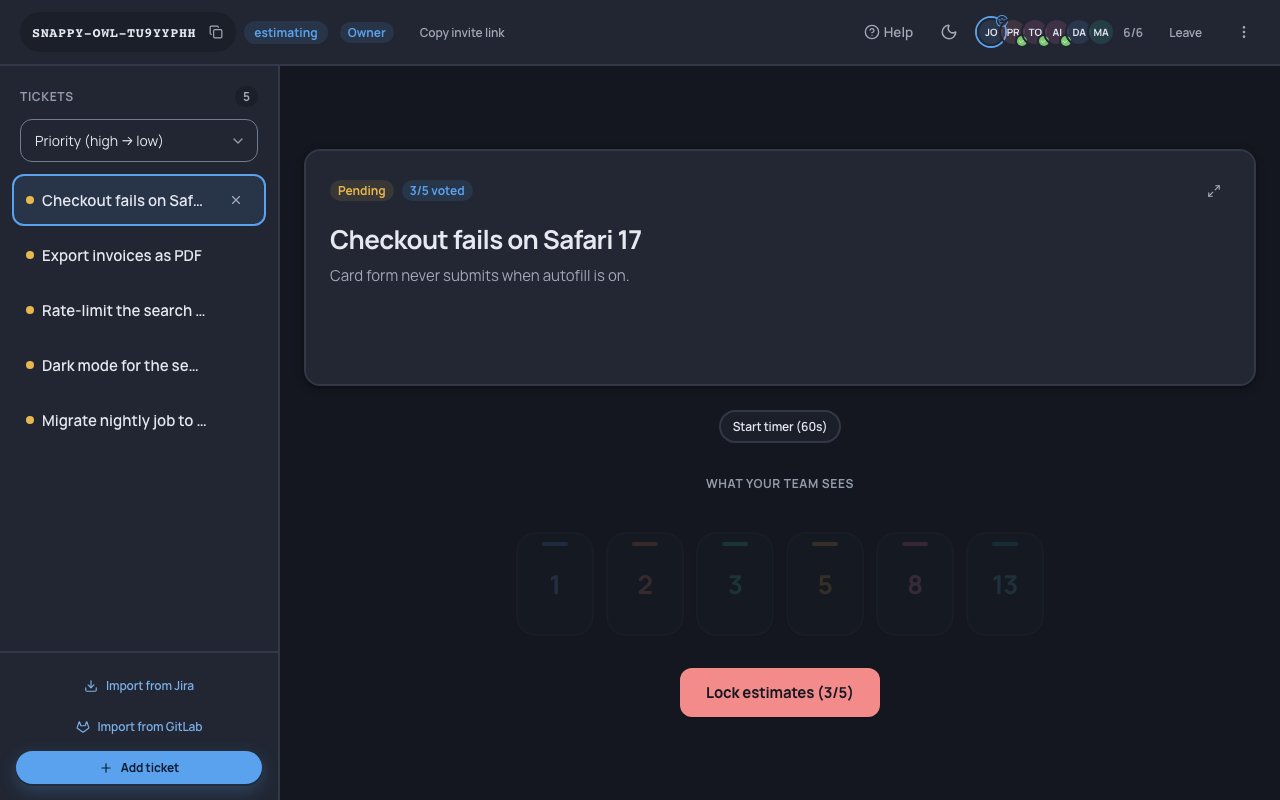
Three of five have voted. Nobody can see the values. Reveal, talk about the outliers
When the host locks the round, all votes appear together with the low, median and high. The person who voted 3 and the person who voted 8 explain themselves. If that changes minds, run another round: every round is kept.
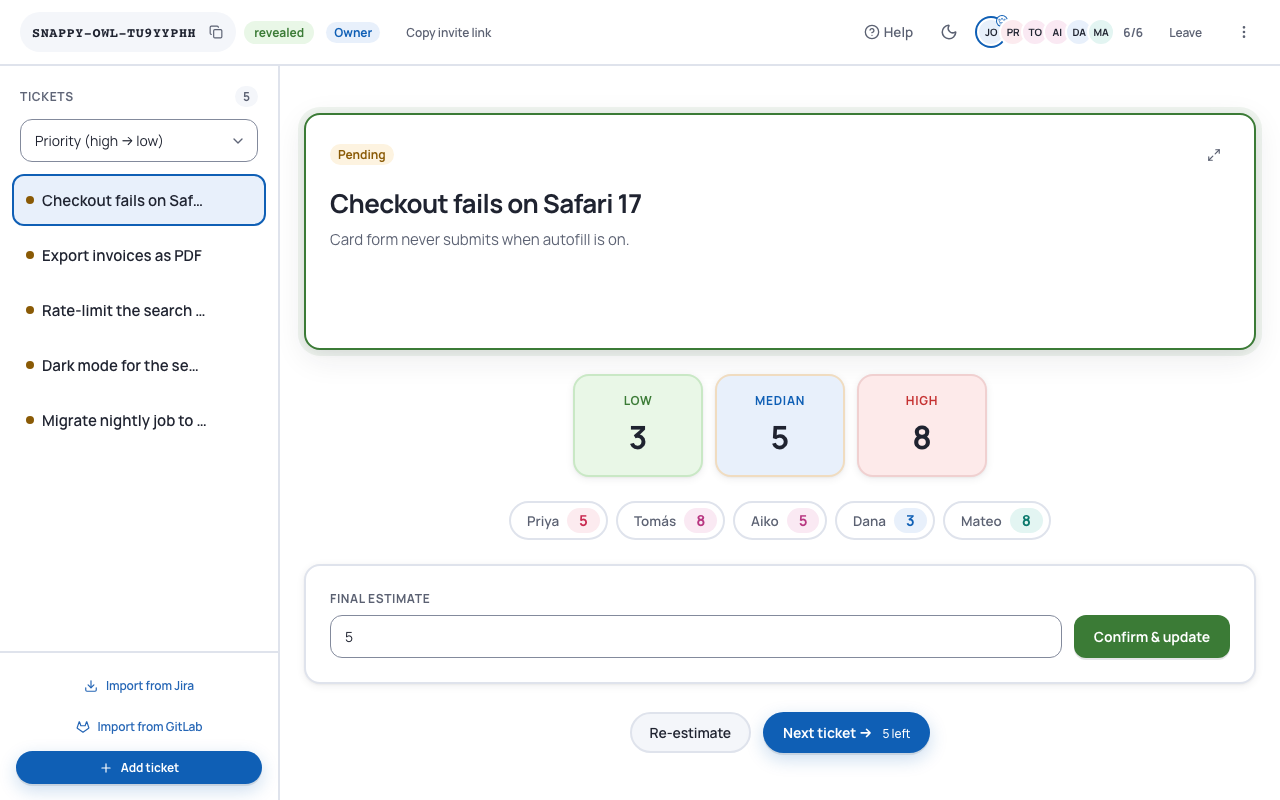
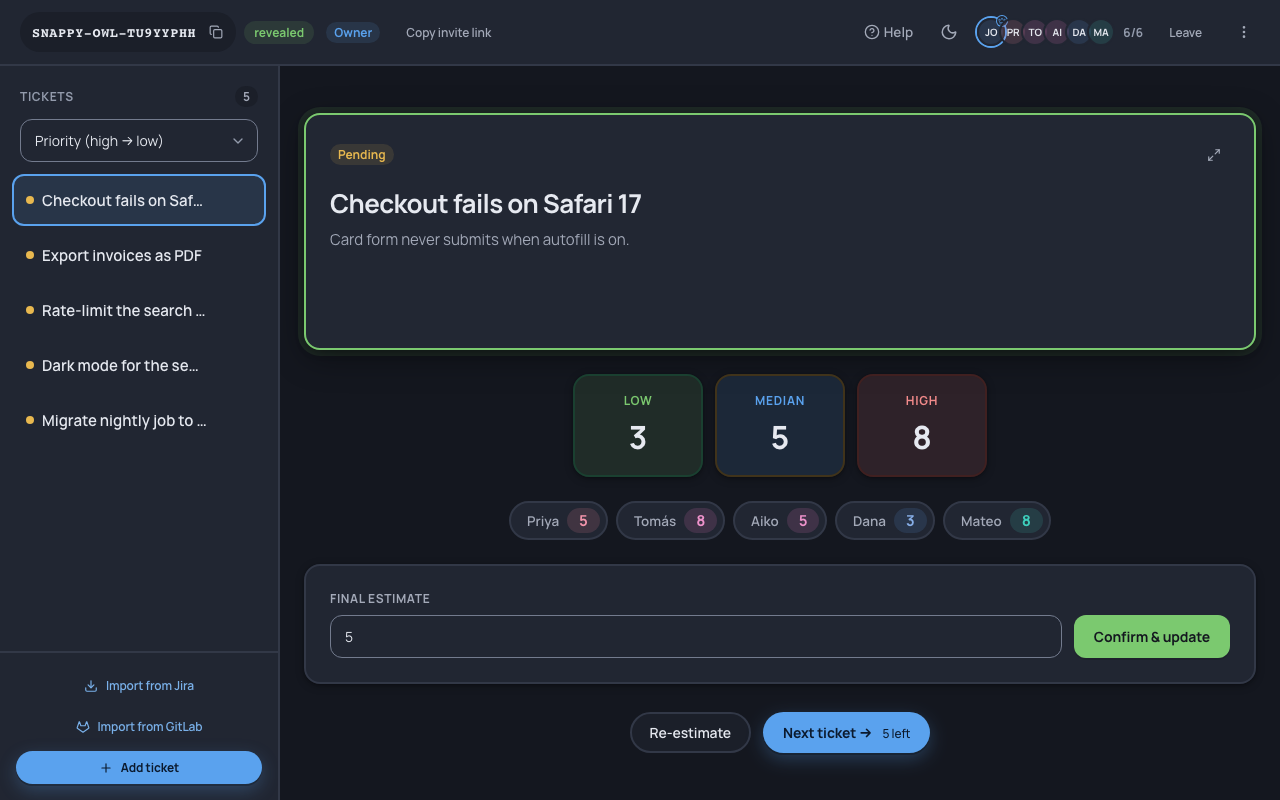
The reveal. Finalise and write it back
The host enters the final estimate and moves on. For tickets that came from Jira or GitLab, the final value goes back to the ticket, so there is no spreadsheet to transcribe afterwards.
The result
A sized sprint backlog, with the estimates already on the tickets and the history of how each number was reached.